Saving Heritage Breeds - 'A Love Story' A Vignette by Katie Gessier
Years ago, when I was an Animal Science lecturer at Muresk in the 1970’s, and Agribusiness became a “thing”; when Agribusiness Economists were preaching to farmers that they should “Get Big or Get Out”, a fellow lecturer was warning that the supply chain factory approach to farming had a problem that would eventually come back and bite us.
He was an expert in Genetics and was concerned that the myriad of different breeds of pigs, sheep, cattle, poultry, which used to provide an interesting day-out at the Royal Show, would go the way of the dinosaur and their undiscovered genes would disappear, never to be recovered. These genes might have been vital for disease control when antimicrobial resistance renders useless all current antibiotics. Or when we needed to breed animals with better heat tolerance (ahh! Global Warming is coming!) or tick resistance, for example.
How boring, when what we wanted to do was set up animal factories producing more milk or meat or eggs, with less food and less cost. Any ‘love’ for the animals disappeared, and soon, on the grain growing farms, there began to be NO animals at all. What a great idea. No need for internal fences, or water troughs or windmills to pump the water, or shearing sheds, or hay bales or fodder rolls.
And no love! I don’t think anyone has ever kissed a tractor or hugged a combine harvester.
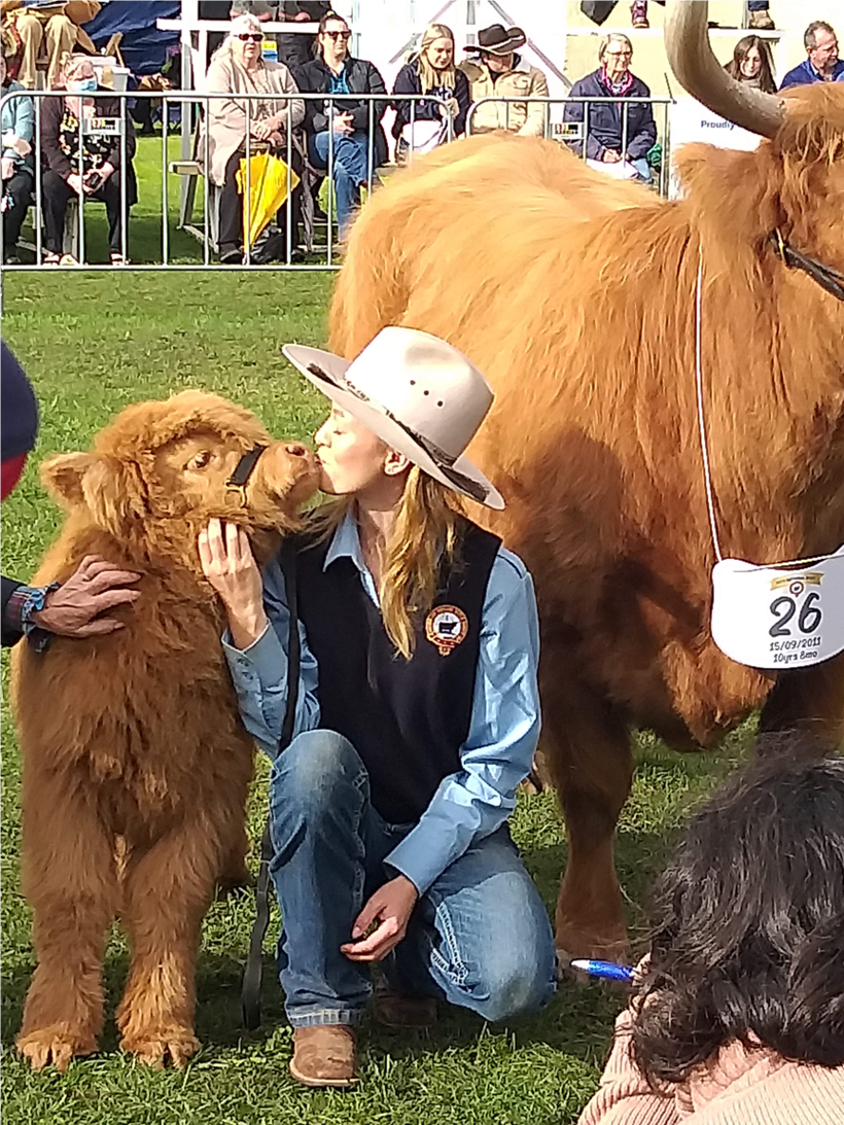
So it was very refreshing to have Catie Gressier visit to give an impassioned argument for saving those odd-ball breeds of livestock. She has even written a book about it. A Vignette!
Already, hundreds of livestock breeds and their specific genes, have become extinct, and the remaining gene pool is kept in cages, feedlots and sheds for their entire lives. The chickens bred for meat are ready to eat only 6 weeks after leaving the egg. They are basically all derived from just two breeds.
According to Catie, the Holstein cattle that now dominate the milk industry, can trace their heritage to just 2 bulls. In the race for higher production and income, there has been a loss of genetic diversity, milk production, fertility, longevity, and increased disease susceptibility.
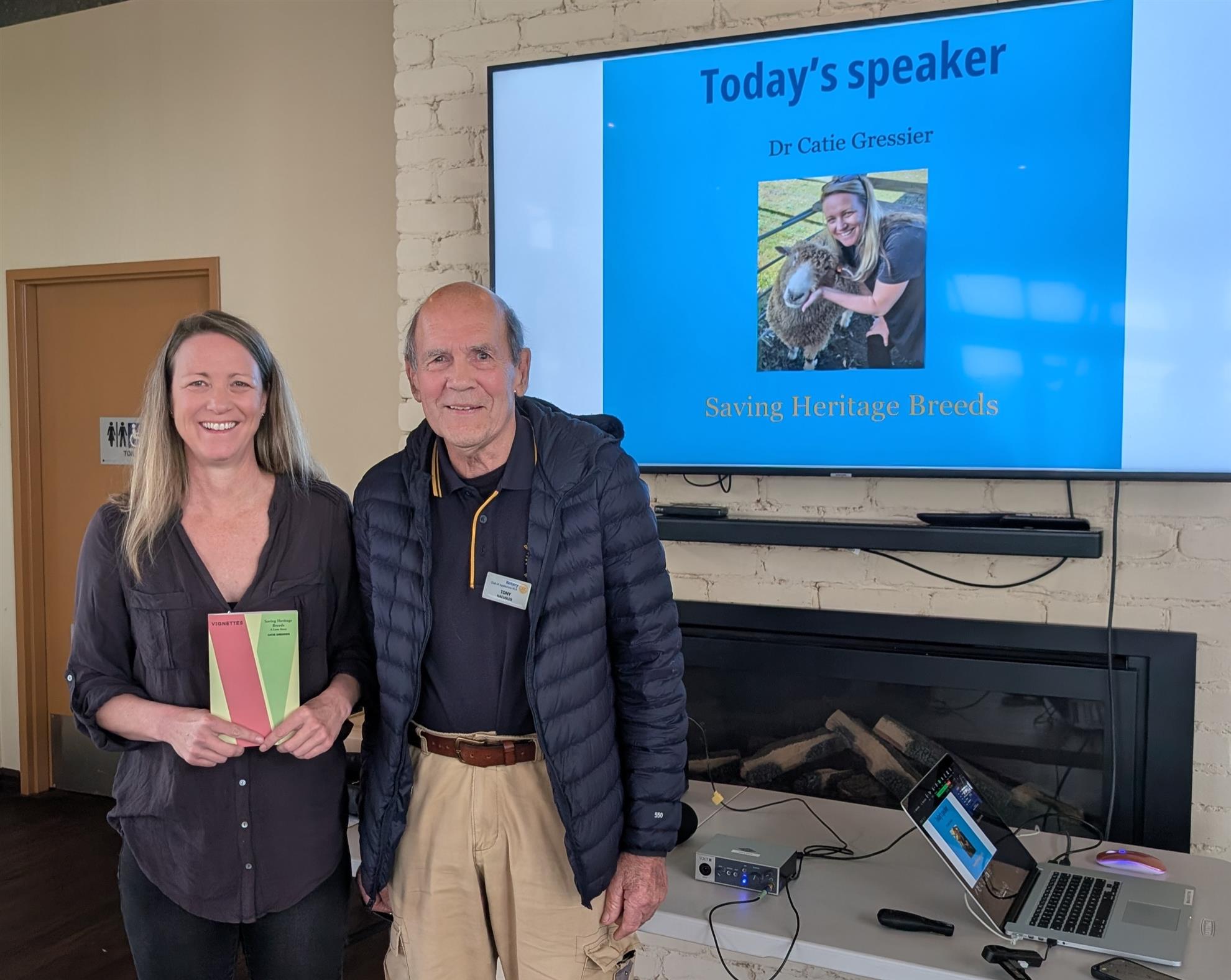
Catie with her book, and “our” Tony Haeusler, a former Beef Cattle breeder, chaired her presentation.
Maintaining biodiversity through many different breeds of livestock is basic common sense says Catie. Trouble is, Common Sense isn’t all that common!