Prostate Care Update
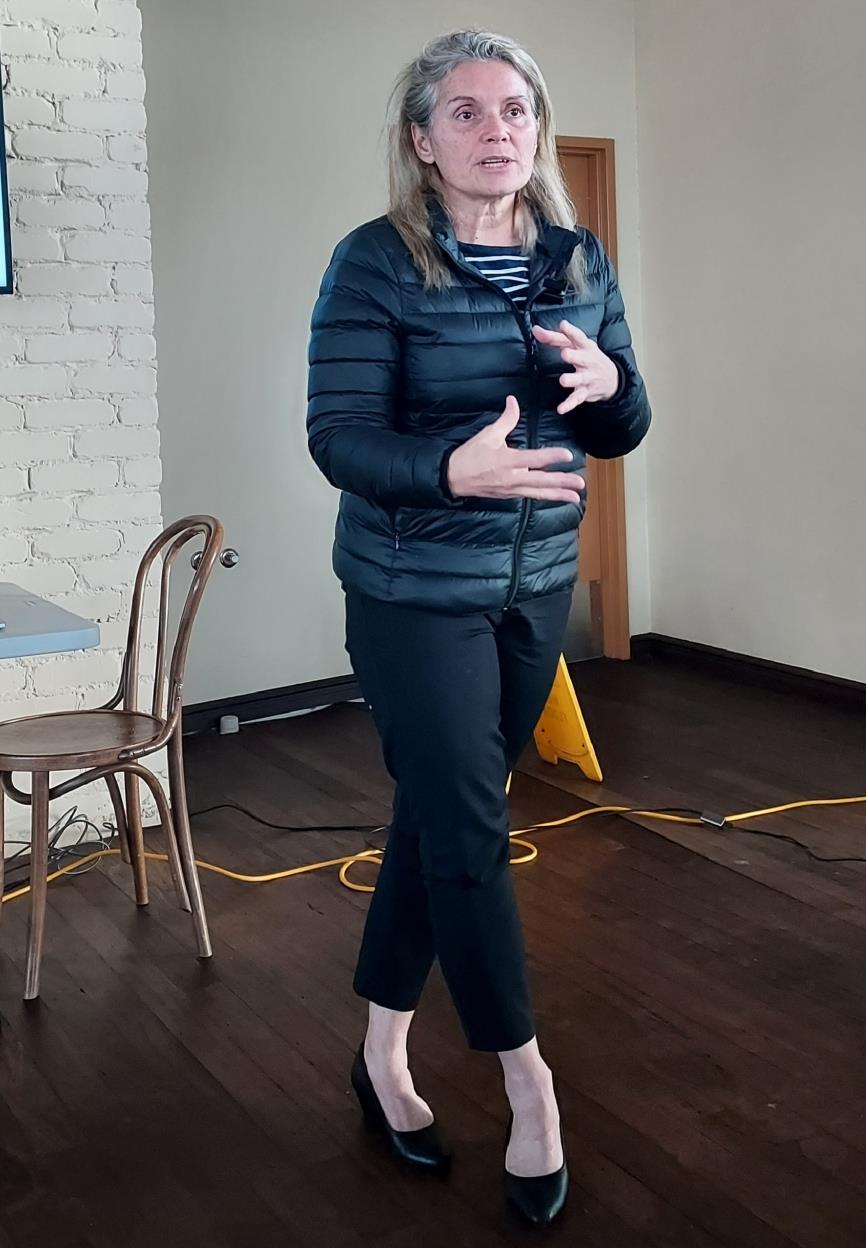
Michelle was our speaker on Tuesday, 22nd July. She gave us a valuable insight and update of her voluntary work through Prostate Care.
Prostate Care originally started in Bridgetown where she lived for a time.
Michelle was recovering from breast cancer and was offered incredible support from not only medical specialist services but also with home help and anything she needed.
In contrast, her father came through prostate cancer, and although his medical attention throughout was excellent, there was no follow up with any voluntary organisations.
Michelle contrasted the difference between the support and services to men who have been through prostate cancer treatment and women who have had breast cancer. More men die from prostate cancer than women from breast cancer.
In Australia in 2024, it was estimated that 3900 men died from prostate cancer, which equates to 11 men a day. Twenty-four per cent of that total in the regional areas are more likely to succumb from this cancer due to inaccessibility to medical diagnosis and care.
One in five men over 70 will get it, and as Barry Mendelawitz, Michelle’s Rotary champion pointed out, 100 per cent of men aged 100 or over will have prostate cancer.
But the disease can strike in younger men, and it is vital that the medical profession are uniform in doing a simple blood test for men aged over 45, especially those who have a family history.
In one outlier case in Bunbury, a 27-year-old man died of stage 4 prostate cancer.
The cause of prostate cancer is not known, there is a lot more research which needs to be done; but mostly it is down to hereditary factors.
If there are two male relatives in a family who have experienced prostate cancer, there is a five fold increased risk factor for other men in the family.
Prostate Care can offer valuable practical help through their programs, which are currently supporting 30 families through recovery.
She referenced a gentleman who had an operation for prostate 20 years ago, and counts himself lucky to be alive, but it costs him $400 a month in incontinence pads. The government allows only $714 a year for incontinence aids, resulting in some men becoming reclusive, re-using pads or even toilet paper. Prostate Care was able to gift $500 worth of pads to him.
If a man is unable to socialise in the way he used to, or has to plan a simple trip to the shops around the availability of toilets; it can result in him becoming reclusive and depressed.
Depression is a very real after effect of prostate surgery, with 90 per cent of men regaining continence control after four months, and sexual potency after two to four years, but for those who don’t there is a risk of social exclusion, depression and even suicide.
Michelle is trying to spread awareness of prostate cancer by addressing groups of mainly men, from the Rossmoyne Bowling Club to 50 blokes at the WACA. At the bowling club, Prostate Care was lucky enough to have a phlebotomist in attendance, who offered a free of charge blood test to determine PSA figures. The “patient” is notified of normal or abnormal range by email, and if his numbers are high, advised to check in with his GP. Michelle stressed that the test is a tool, not a diagnosis.
At the WACA, some of those younger blokes didn’t know what prostate cancer was. Michelle was taken aback but realised that not as much is known about prostate cancer compared to other forms of cancer, and her mission is to make it more visible and increase awareness.
For Michelle, the best way to ensure men are tested, is to have a phlebotomist in attendance at her “here and now” meetings, rather than men leave one of her talks, promising themselves to get tested, but six months, then 12 months go by, and they have forgotten about it.
Prostate Care has partnered with Saturn Pathology and together, they hope to take knowledge, support and testing (in a specialised van) about Prostate Cancer to the regions.
Michelle is hopeful of encouraging our next generation of men to be tested, overcoming their natural reluctance to ask for a simple blood test from their GP, and to offer men who have been through prostate cancer, dignity, practical support and hope.
 for Michele's presentation