Our guest speaker Sharon spoke about the 13 years she and her family spent in Saudi Arabia. Sharon’s husband BD was a navigator in the RAAF and came home one night to ask if Sharon would be interested in a job offer, based in Saudi Arabia. They had spent seven years in a Brisbane posting and BD had recently been promoted to squadron leader. Their children were aged five and three years respectively.
Sharon loved the opportunity that experiencing a completely different way of life and culture offered and jumped at the chance. She and the children eventually arrived in Saudi, via Jeddah in September 1999.
The religious police enforced a strict dress code with women who were outside of their homes. Non compliance was punished with yelling and even beatings around the ankles with canes. Local women were also expected to wear hijabs or head scarfs.
Men and women were segregated with signage for queues and restaurants. On the female and family side of a restaurant, windows were opaque so they could not be seen from the outside.
Saudi life revolved around prayer times, with first prayers at sunrise. Prayer times were based on the position of the sun.
At the call to prayer, all trading and business ceased for the duration. Sharon, BD and her friends were at dinner in a restaurant when a call to prayer sounded. They were ushered out of the restaurant and allowed back at prayer’s conclusion, to continue with their cold meal.
During the 30 days of Ramadan, Muslims may not eat or even smoke until sunset, when they break their fast. Exemptions apply to pregnant women or children.
Shops closed between 12.30 to 4.30pm due to hot temperatures and opened afterwards to late in the evening.
Sharon learnt to read Arabic numbers so she could understand the expiration dates on the food she bought.
At the compound where the expats lived, women and their families were only allowed to leave on buses which were provided. Each time they returned to the compound, their IDs were checked. Any visitors had to be physically inspected and their possessions examined.
The compounds were guarded by armed men and tanks.
Work for expat women was limited, unless they were teachers or nurses. The compound included bars and restaurants and it was almost easier to stay there, rather than venturing outside. Plus there was no dress code which had to be followed.
The families made their own fun and formed groups to play cards or mahjong, exercise or sew.
During the 13 years the family spent in Saudi, they had to adapt to three different locations. They differed according to geography, BD’s job at the time and their children’s ages.
Their first posting, Asir, was most interesting and differed to the rest of the country by virtue of its diverse geography, consisting of rugged and mountainous regions. Men in particular dress usually in striped sarongs and black shirts. The colour and width of stripes denote different positions within the tribes. Flower people in the region were the most helpful and friendly and vie to wear the most colourfully arranged headwear.
Right up to the 1980s, 60 families were still living in a village 200m down a deep gorge, growing their own vegetables and running sheep, chicken and goats, with supplies delivered via a wooden and steel pulley system. A cable car was then installed for tourists to visit the village.
There is abundant wildlife in Asir, including Palestinian sunbirds, colourful blue lizards and Arabian cobras which spits venom but can bite you as well.
Corporal punishment in Saudi was abolished in 2020. Sharon and her family did not visit the town centre on Fridays, which was execution day.
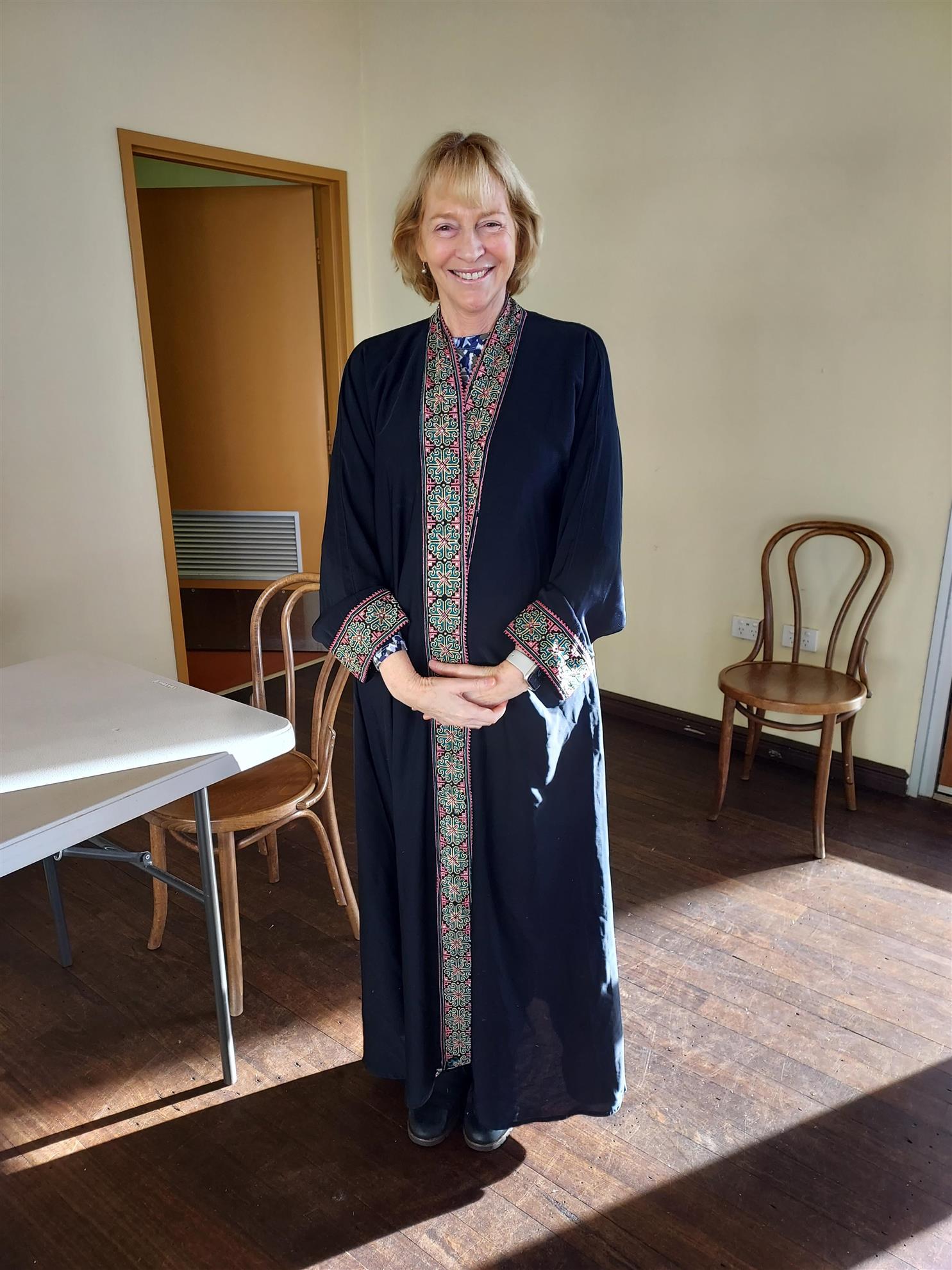
At the meeting, Sharon demonstrated wearing her abaya, which had a highly decorated trim. But when she arrived in Saudi, black was the only colour allowed.
Sharon introduced us to a whole new world from the assured safety of our meeting place in Mt Pleasant. Members were rapt in her presentation and lined up to ask questions afterwards.