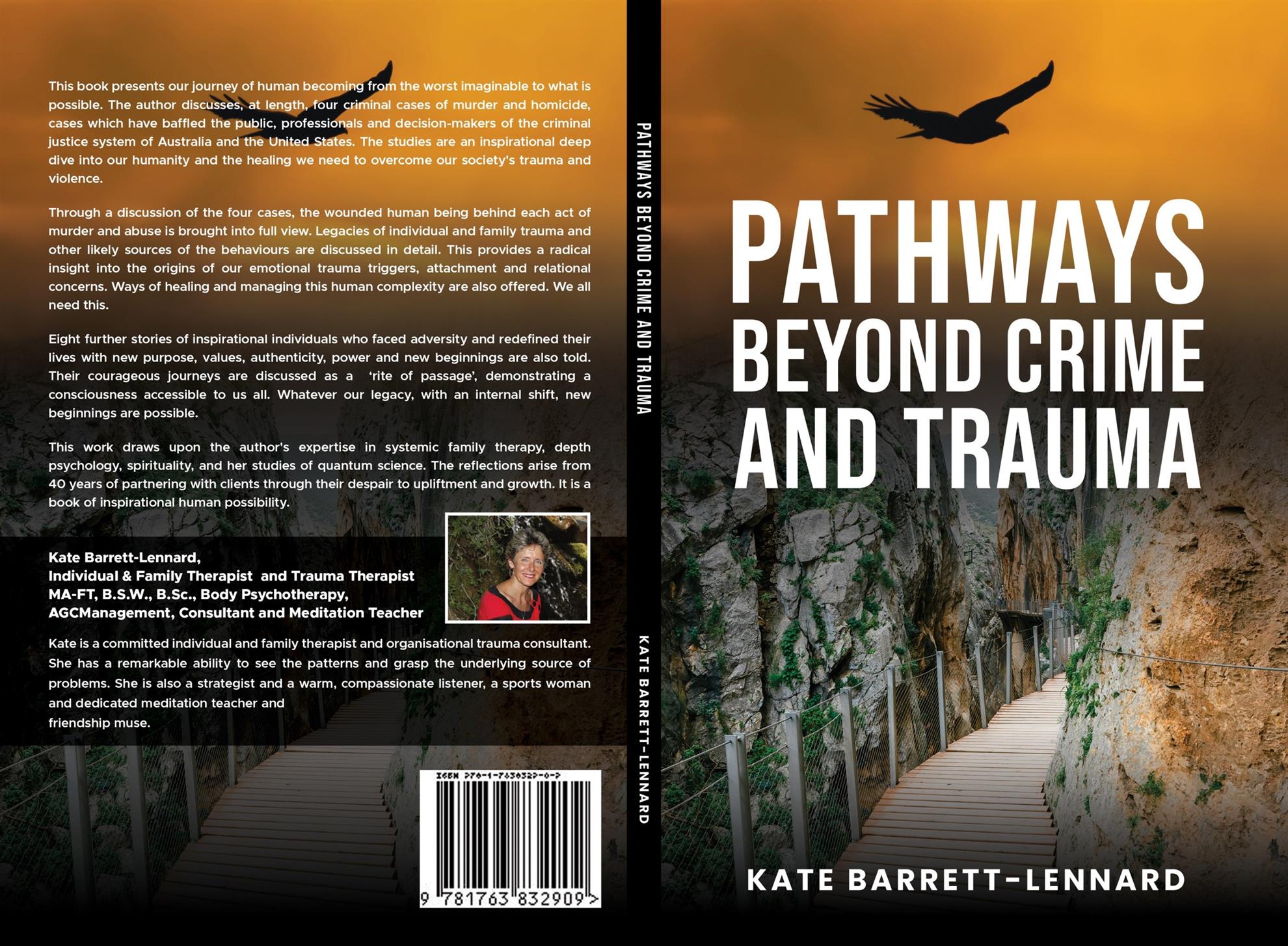
Pathways beyond crime and trauma
Some of us remember Family Therapist Kate Barrett-Lennard speaking to us four years ago, about the book she had begun writing. She recently returned with several copies of her book, and a whiteboard. According to a review I read, the book discusses the transgenerational trauma influences behind acts of crime. "It presents the journey of human becoming from the very worst to the best.” As a Family Therapist, Kate helps people take care of themselves and learn to take care of their relationships.
Kate told us every family has a story, and this one is about Harry, a ‘really nice guy’.
Don’t know about you, but I haven’t seen anyone use a whiteboard for years, and yet the way Kate used it made here talk very informative, and powerful. There was no way she could have used PowerPoint or a video to make the same impact. Unless it was a video of Kate telling her story using a whiteboard of course, so I’ll do my best with this write-up.
Kate described the picture she drew during her talk, as a Genagram, because it was about three generations in a farm family, using used circles and squares to represented women and men.
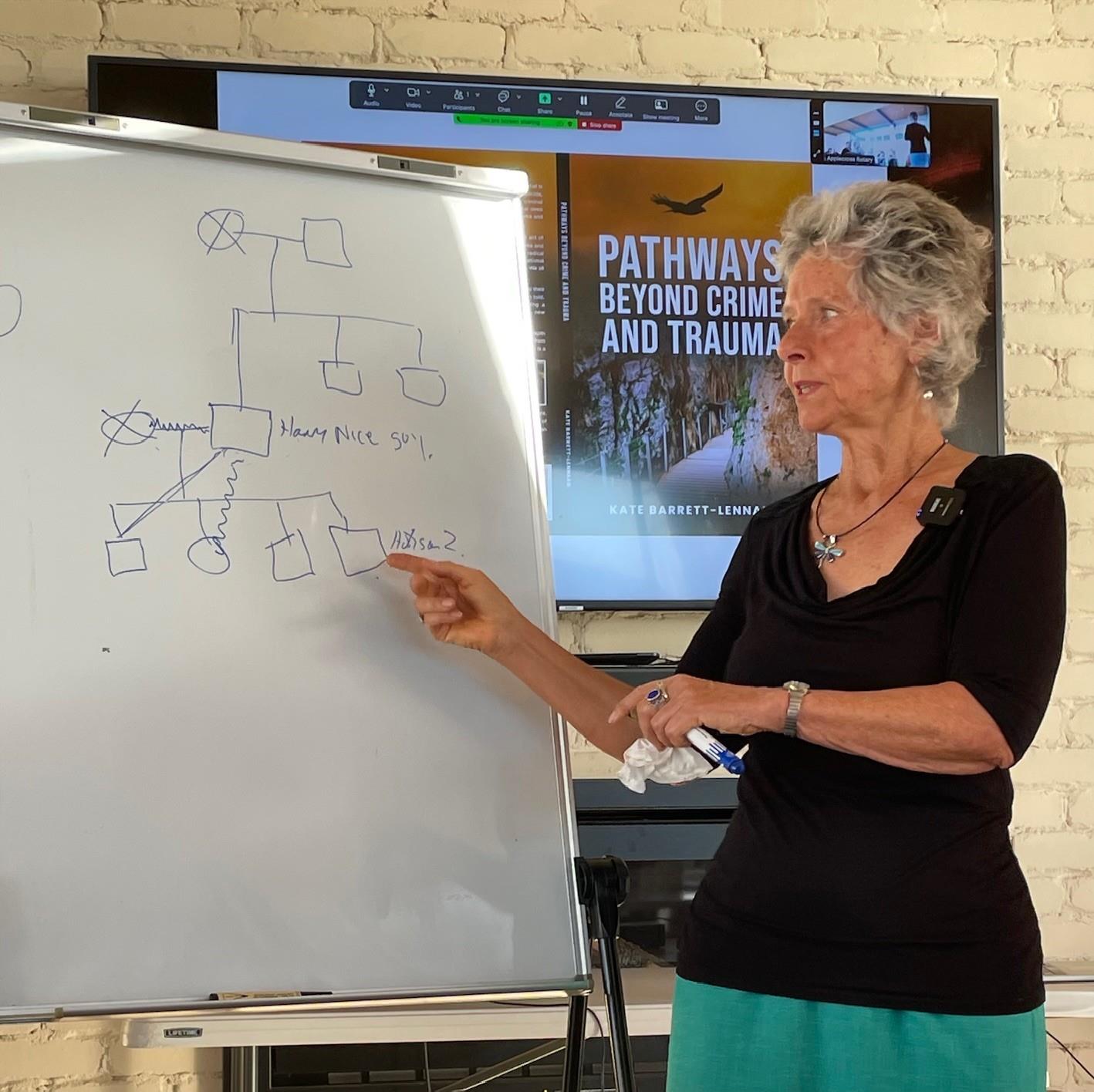
It was all about Harry, a really ’nice guy’, plays footy for the local club, helps run the social club, everyone’s mate, that’s Harry.
The Genagram starts with his parents, shown at the top of the drawing, and their four children, one of whom, Harry takes over the farm having promised to pay for it with four annual instalments of one million dollars.
Harry marries a nurse and they have four children, one of whom, Jane, is very intelligent and autistic. Harry’s wife continues to work as a nurse which provides welcome income for the family. Unfortunately she has a near fatal fall from a balcony and needs ongoing rehabilitation. And of course stops work.
Harry isn’t coping, and he becomes scared his wife will leave, taking the kids with her, leaving him alone. He is scared. Very scared.
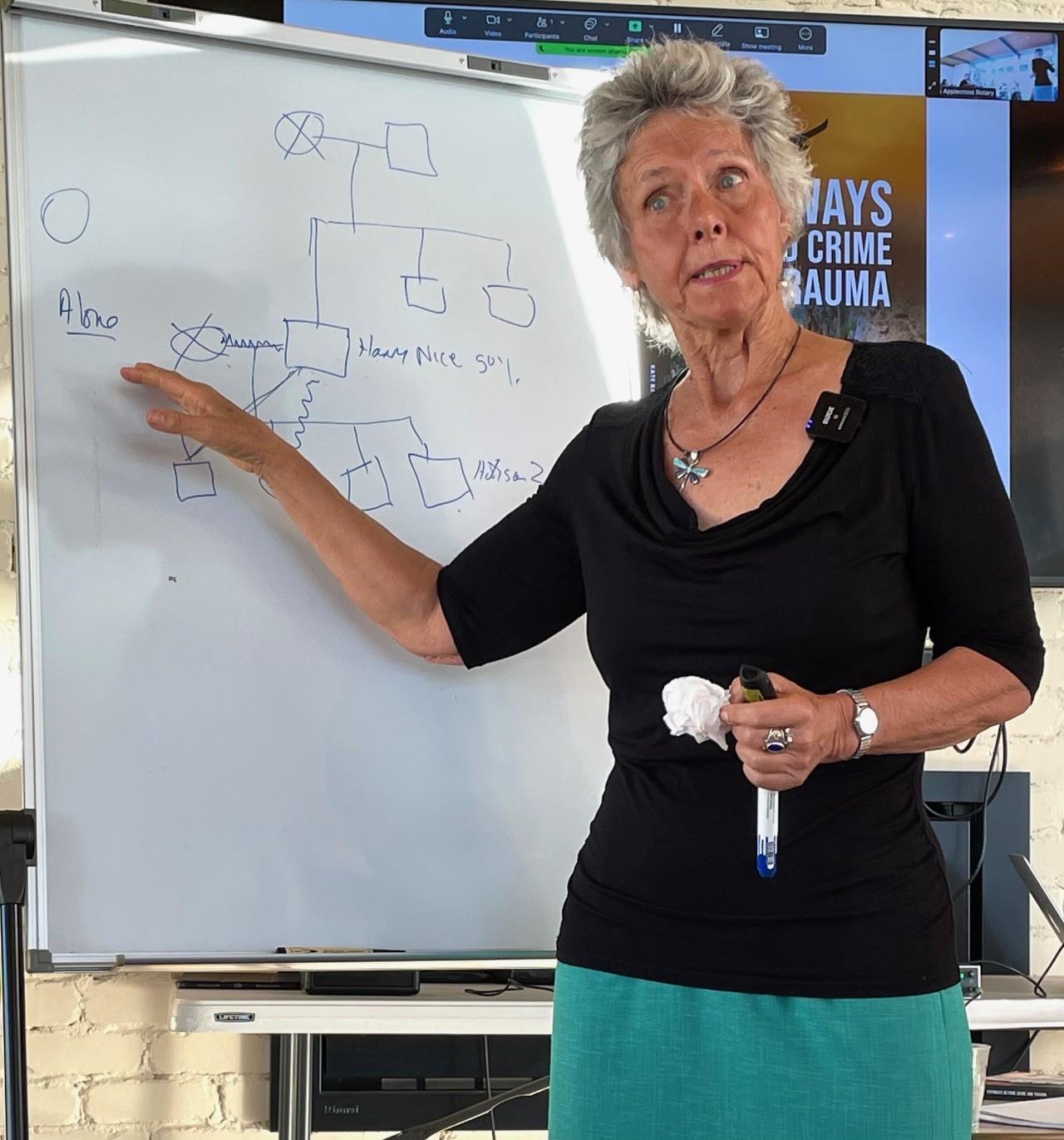
The local police are asked to make a welfare call at the house because friends are concerned the kids are not at school, and they discover the murdered bodies of the three kids and their mother, and Harry, who has committed suicide.
Kate leaves us to ponder the question: Would intervention have prevented the eventual tragedy?
I think you’ll have to read Pathways beyond crime and trauma to find out what Kate thinks is the answer, and how she would have helped Harry reclaim his life and identity.
I really didn’t know what to expect from Kate’s presentation, but I am so glad she came along and spent some time with me and the others members attending our weekly breakfast meeting.